

If you care about your legal rights and data privacy then this is worth a read. Instead of ranting about why I hate the controversial EULA for this game, I decided to take a more balanced approach. There are already plenty of reviews venting frustration — understandably so — but there should also be at least one that tries to examine both perspectives fairly. I spent well over an hour reading background context on this issue and then had GPT-5 help me compile a large amount of information that would have taken me hours more to fully digest and cross-reference. The following is a distilled, balanced summary based on factual discussion rather than emotion, meant to help you make the most informed decision possible. FOCUS OF THIS REVIEW This review is not about the gameplay, which is excellent. It’s about the End-User License Agreement (EULA) and related privacy concerns surrounding Owlcat Games’ titles, notably Pathfinder: Wrath of the Righteous. BACKGROUND After release, Owlcat introduced a revised EULA containing a clause that allowed the company to “upload software program files to the user’s device that will record CPU, RAM, operating system, video card, sound card, software and applications of other developers, peripherals, geolocation, and other technical and statistical information and provide it to subcontractors.” The change coincided with the inclusion of an advertising-analytics tool (AppsFlyer). Following public backlash, Owlcat announced that it had removed that specific tracking component, but the broad wording in the EULA remained. ARGUMENTS DEFENDING THE EULA - Common practice: Many Unity-based games collect anonymized system specs for performance tuning and crash diagnostics. This is standard and can improve future patches. - Post-backlash fix: Owlcat responded to criticism, removed the advertising tracker, and players confirmed the game runs completely offline - Legal over-reach, not malice: Some suggest the overbroad language was likely a sloppy attempt at legal coverage, not intentional spyware. ARGUMENTS CRITICIZING THE EULA - Excessive scope: The clause isn’t limited to basic telemetry. It gives permission to install software, scan your device, collect geolocation, and share data with unnamed subcontractors. - Retroactive change: Many users purchased the game before this clause existed and were later forced to accept it, which feels deceptive. - Lack of transparency: On GOG’s store page, there is no visible link to the game-specific EULA before installation or update. - Lingering rights: Even after removing the ad tracker, the company retained the legal permission to collect similar data again later. WHERE THE LINE IS Reasonable telemetry means collecting anonymous, minimal information that genuinely improves performance or bug fixes. Crossing the line means silent software installation, geolocation tracking, or gathering data unrelated to gameplay. By that standard, Owlcat’s EULA language steps into questionable territory — even if they never fully acted on those rights. WHICH SIDE IS MORE CREDIBLE After comparing both sides, the critics make the stronger factual and ethical case. They quote the text directly, show that it appeared post-release, and highlight how little notice users had. Defenders raise valid context — telemetry is common, Owlcat reacted quickly — but rely more on assumptions of good faith than on clear contractual limits. PRACTICAL TAKEAWAY If you already own the game, you can check your installation folder for files such as “EULA.txt” or “Licenses.txt,” though some versions (like mine) contain only the latter. Either way, you can safely block the game’s executables from outbound network access using Windows’ built-in Advanced Firewall (wf.msc). It fully supports both inbound and outbound rules — you don’t need third-party software, just avoid the simplified firewall interface. The game is single-player, so there’s no downside, and doing this prevents any unwanted telemetry or background data exchange. FINAL THOUGHTS This controversy isn’t just about one studio — it’s part of a growing industry trend of slipping overly broad data-collection rights into legal fine print. Owlcat deserves credit for listening to the backlash and removing the advertising tool, but trust was still shaken. A fair contract should be specific, transparent, and proportional to the function it serves. Until the EULA is rewritten in clear, limited language, buyer caution remains justified. 🕊️ If you read this far, thank you for caring about your privacy and your right to make an informed decision. Even if you ultimately choose to buy the game, at least you’ll know the full story.
Seems like a game with some potentially fun and interesting mechanics under the hood but wants you to put in a full work week to understand any of it. Unintuitive UI that doesn't seem to be explained (at least by default). Tutorial? I couldn't discern one. The game CTD for me more than once in my few hours of play. GOG says I clocked 11 hours in this game which is incorrect and I know why. I suspect I put in no more than an hour. But after one of the game's CTD's the executable kept running in the background even though no game window was visible, so the GOG client kept logging it as time played. Sadly the only pro I can think of at the moment is that the game was under $4 bucks when I got it. So it might be a good game but I'll never know because it shouldn't feel like work to uncover the mechanics or how to play, or to decipher an unexplained UI.
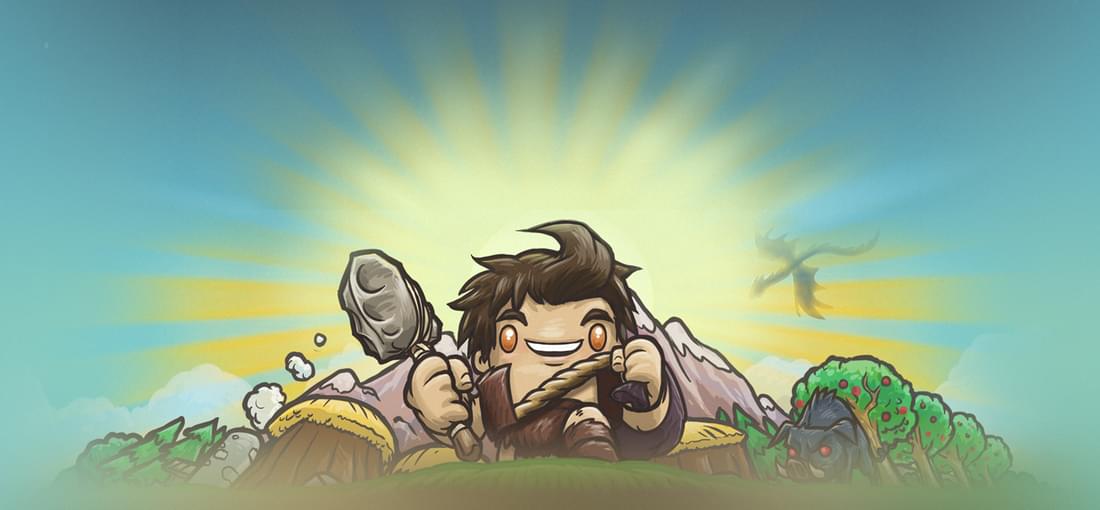
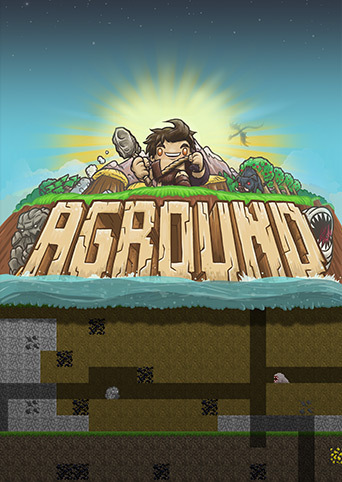
This was an unexpectedly great game for me. It's been a while so I don't even remember how exactly I obtained a copy or why I decided to. On the surface it has game elements that interest me so I'm sure that's part of it but I usually avoid 2D side scrolling with some exceptions, I loved Starbound (though it changed a lot over time). This is not a game for those who demand good graphics at any cost but this game makes up for it in every other area possible, I think. As simple as this game is, it has a great sense of progression. I do like the "start with nothing and build your way to success approach". You get to a point in this game where you will face two branching paths (though you can actually combine them depending upon your actions) and I really like the fact that they incorporated such diversity in the overall progression--at least for a 2D indie title. I also like that the automation during progression just works. I don't recall any obnoxious micro management needed on my part. I wish there were more games like this, 2D or otherwise. I guess you could say, "What are you talking about there are a ton of games like this." Yet very few of them ever give me the same feeling that I had while playing this one.
