
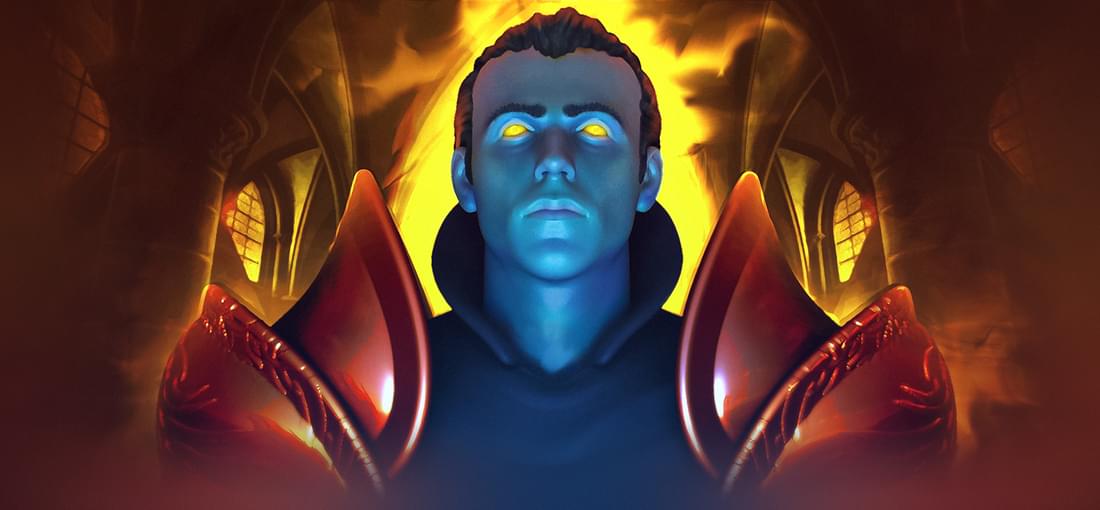
Din's Legacy is an ARPG that controls like Torchlight but executes like Rimworld. If you're looking for a game about min-maxing your character for a predictable story like a well-oiled swiss watch, look elsewhere. If you're looking for a game that actually makes you feel like a hero fighting against an encroaching threat that you CAN lose to, you'll find this game has a lot of excitement under its ugly-duckling exterior. This is a sequel to Zombasite, the world is slowly recovering from the zombie plaguebut your race of orc/elf hybrids were cursed by necromancy to constantly mutate, and are mistrusted by the world at large. The trickster god Din takes an interest in your character and grants you limited immortality to perform heroics around the world to build a good name for the mutants. Each world is randomly generated. You are placed in a village that needs your protection and the goal of every map is to complete all the random quests before the village is wiped out. Unlike other RPGs, the forces of darkness are not patiently waiting in their lairs for you to come and slay them, they're recruiting lieutenants, performing rituals, and doing other dastardly deeds to kill your villagers. Take too long and your village WILL be invaded an wiped out. Win or lose you can always roll up a new world to save with the same character. This game's new feature is mutation. You randomly get good or bad minor mutations as you play, (for example, a flame wave effect added to a whirlwind attack) and can suppress bad ones with skill points. Then as you gain XP you earn major mutation points which can be spent to switch classes ala. Final Fantasy Tactics while also flushing bad mutations and refunding skill points. Protip for new players: Vendors are rare in this post-apocalyptic world, mainly you should be breaking down junk equipment at the crafting bench to produce ingredients to repair, enhance, and enchant the good stuff. Try the demo! It's better than it looks.
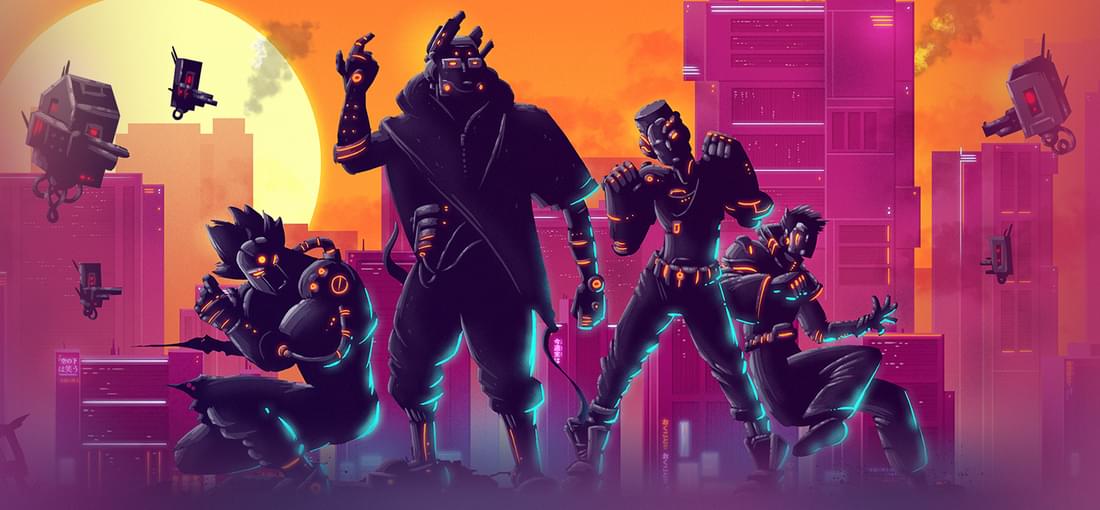
Dark Future '88 is a visually spectacular roguelite sidescrolling platformer. Never has an epilepsy warning been more warranted in a game; you will be drenched in bloomy, colorful, neon soaked, moving lightshaft, hot pink and teal smoke, cyberpunk madness. Couple this with a synthwave soundtrack that slaps and the guy from Darkest Dungeon taunting you through a distortion filter that makes his voice sound like Sinistar from the arcades. You move with WASD and aim with the mouse cursor. You start out with a double jump and an invincibility dash with a substantial recharge time. Jump physics is very floaty. You can only carry two weapons at a time. Over the course of the game you can accumulate many additional dashes and speed boosts through perks and stims. Animations are fairly choppy but enemies in the game are pretty good about giving warnings before they pull off an attack. Ranged enemies tend to fire in slow but tightly-packed bullet patterns for you to dash through or neutralize with melee attacks. Enemies individually aren't that dangerous, most of the challenge comes from having to kill them quickly while racing the game's 18 min. time limit. You also need to make sure to pick up all the powerups enemies drop quickly, or the tower itself will steal them to level itself up, granting itself perks that make your run more dangerous. The main complaint I have for the game is the lack of ability to rebind keyboard and mouse buttons. The default layout is doable but I'd much prefer Shift for dash and RMB for weapon switch. If they patch that in, add another star to the review. Also the game does itself no favors with the sheer amount of post-death unlocks, not only locking away new weapons and perks, but also important game systems like stims. For all I know, by next week the game could be completely different due to still-hidden mechanics. If you're delighted by the game's aesthetic there's definitely fun to be had.

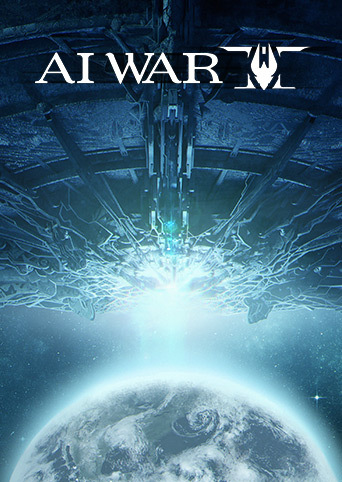
After a publicly turbulent development cycle, the sequel to one of indie gaming's most complex and original strategy games is finally here. The premise is humanity has lost the war against an AI rebellion. The remaining pockets of humanity are so weak the AI considers them beneath notice and has turned its attention to threats outside the galaxy. You command the last bastion of humanity capable of fighting back. Instead of a total war, which you would lose, you have to carry out a guerilla campaign, gaining fleets and resources and tech and carefully winding a path through the galaxy to the AI core without presenting enough of a threat for the AI to take much notice of you before it's too late. The action takes place in the orbits around planets, connected by a web of warp gates. Each planet you control brings in a constant stream of metal and energy, like in Total Annihilation, as well as a finite amount of research and hacking points. In addition, planets can have strategic resources for increasing the size and quality of your forces. The problem is, every planet you take back from the AI increases its aggression meter (AI Progress) which increases the size and tech level of its forces, especially the ones it sends in regular waves to attack your systems. Conquer a big chunk of the galaxy for yourself, and suddenly you can get squashed by the AI retaliatory fleet. Unlike the first game, you don't build and control ships individually. Instead you have carrier fleets with a random selection of ship types installed, and nearby factories automatically build strike craft for them until they reach their unit cap. Once deployed from their carrier, you can still command individual ships or lasso groups to do flanking maneuvers and the like, but from a grand strategy perspective this makes things much simpler. I'm out of space. It's prettier, more streamlined, and more approachable for newcomers than AI War 1. But the AI is just as smart/scary. Recommended!
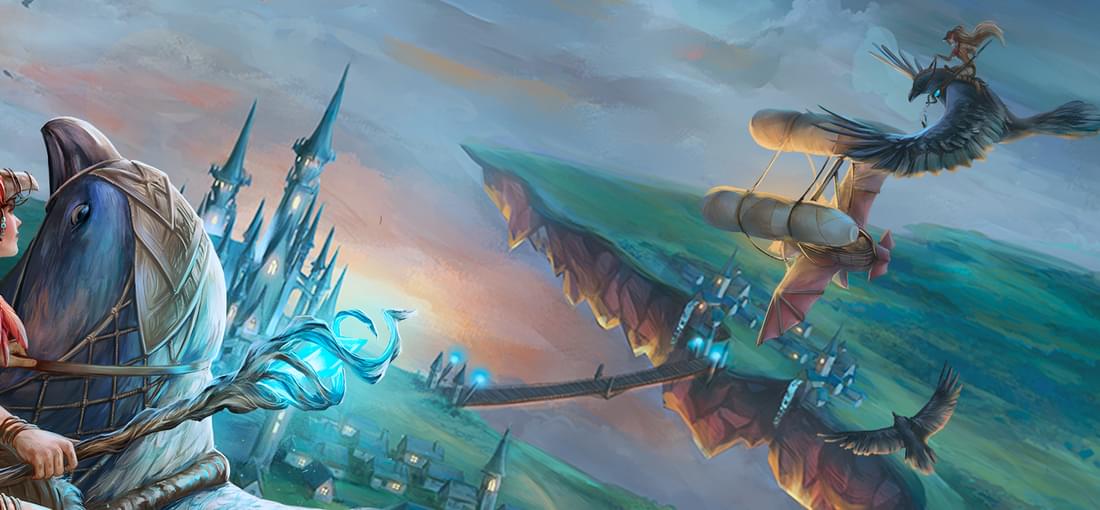
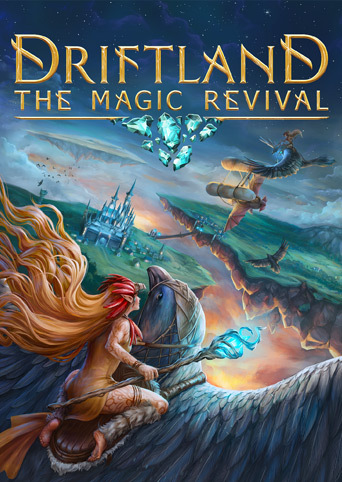
A real time 4X in the vein of Sins of a Solar Empire taking place on a shattered fantasy world made up of floating islands. You and your opponents are the first wizards born in a generation powerful enough to bring the floating shards together and bridge them, setting off a war to see who will be the first to rebuild and subsequently rule the world. In addition to Sins, Driftland is influenced by the Majesty games. Your army is made up of individual hero units who you don't control directly, but rather influence their actions by placing reward flags throughout the world. The economy is nothing like Majesty, though, none of the heroes have their own money, you're instead balancing the limited housing each shard can support with the land-hungry farming necessary to feed them so your citizens can be put to work extracting resources used to equip your heroes with various skills to make them more potent fighters against hostile barbarians and rival kingdoms. The most powerful floating islands you can capture have nests on them where heroes can tame a flying mount ranging from a giant raven to an actual dragon (Dwarves don't tame, they build their own flying machines). Obviously in a world of floating islands, heroes who can fly have a huge advantage. Another game that shows off the Unreal Engine 4 at its best. Gorgeous glowing spell effects, close zoom levels that let you see a dizzying horizon of stars above the exposed planet's core. And each of the 4 factions has their own separate musical score that changes dynamically with the action.
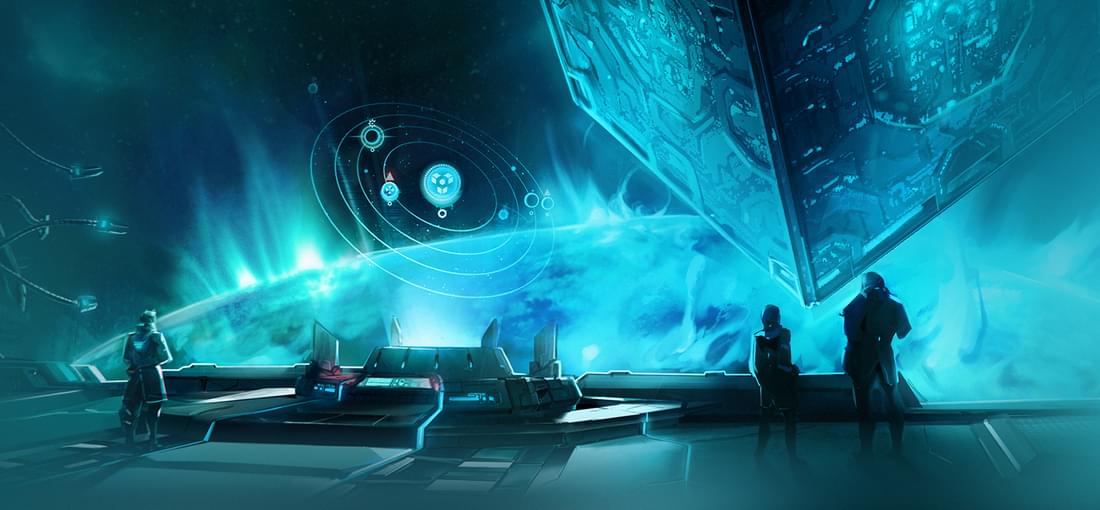
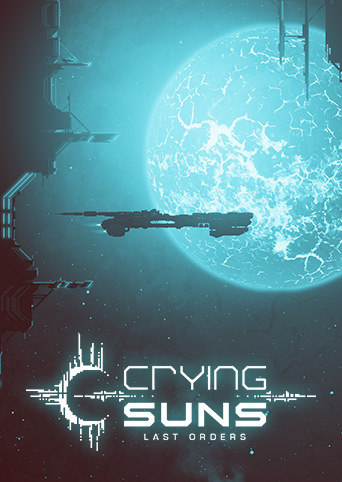
The other reviews go into the graphics and the setting so I'll just describe the gameplay. It's an FTL-alike where you need to transverse a series of linked nodes from left to right while being pursued by an enemy fleet. Each node has multiple planets that can be explored in any order you wish, but traveling between them still costs fuel. At the rightmost node is a boss fight. Encounters are FTL-style multiple-choice questions with MUCH more voluminous lore, but a "safe" option if one of your command officers has the right perk. Planetary away missions are hands-off dice rolls based on the command officer's perks. Combat happens in pauseable real time on a hex grid. Both capital ships sit on opposite sides of the map and deploy strike craft. The map is strewn with asteroids and automated turrets and other terrain that can be used strategically to tilt the odds in your favor. Strike craft come in three basic forms (fighters, frigates, and drones) with a basic rock/paper/scissors balance between them, in addition to long-range artillery cruisers. When a wing of strike craft is destroyed it isn't gone permanently, but they are out for several crucial seconds and when they come back it's at half HP, so getting first blood gives you a major advantage. Meanwhile the capital ships are slowly charging up their big cannons to either shoot each other or nuke the enemy's strike craft. The closest analogues for how gameplay works is a cross between Bad North and King's Bounty. Later in the game you acquire higher-tier versions of strike craft with random bonuses like teleportation or cloaking devices, or my favorite, a version of drones that cause a huge area explosion after they're destroyed so it's actually to their advantage to get the half-HP penalty. Likewise your capital ship gets bigger and nastier weapons that do more damage in different hex shapes to better give your strike craft a clear runway to the enemy capital ship's vitals. I'm out of review space. It's good!


Assault Spy is a stylish brawler with a combat system that feels like a merging of Devil May Cry with the Platinum Games. It takes place in a comedy of errors themed around the stressful life of a corporate salaryman. It's mind-boggling that this is an indie game by just one creator. You play a corporate espionage agent saddled with a useless trainee who keeps blowing his cover and forcing him to engage in flashy battles against security robots that look like smartphones, segways, and other pieces of soulless corporate furniture come to life. You can also unlock a second character who's a female CIA agent with a somewhat less mobile but heavier firepower fighting style. This game makes a poor first impression because the menus and in-engine cutscenes are very amateurish. But once you start actually fighting it becomes clear the bulk of the graphical flair went to the combat effects. Like most games in the genre you start out with only a couple basic combos then have to earn money to unlock new moves. Fortunately unlocked moves carry over between difficulty levels and new game plus. Gameplay-wise this is the most impressive stylish brawler to come out of the indie scene since Aztez. It uses a timing-based combo switching system like DMC, but also perfect-timed versions of moves to discourage mindless button-mashing. Enemy step and other more advanced moves are unlockable as well. Character space in this review is limited for me to go over the full system, so check out some of the combo videos already online to see the fully unlocked game in action. Besides the amateurish vibe of the visuals, the biggest problem with this game is the camera. Protip: the lock-on button is your friend. Also a personal gripe I have with the game is several moves involve pushing two buttons at the same time and that makes some moves very awkward to pull off with two face buttons. If you understand it's a one-dev game, it's the best stylish brawler on gog right now.
