It is the dawn of a new age. The most momentous of wars has begun in the heart of the Sacred Lands. Four factions - the Empire, the
Mountain Clans, the Undead Hordes and the Legions of the Damned -
stand ready for battle as they fight for the survival and dominance
over their war-torn world, and the...
It is the dawn of a new age. The most momentous of wars has begun in the heart of the Sacred Lands. Four factions - the Empire, the
Mountain Clans, the Undead Hordes and the Legions of the Damned -
stand ready for battle as they fight for the survival and dominance
over their war-torn world, and the gods they have long believed in.
The Mighty Lords watch silently as their Disciples prepare for the
daunting tasks ahead. Each warrior must engage in a struggle of
swordplay, sorcery, and uncommon courage in order to complete their
sacred quests. The Empire fights to secure their people's future; The Mountain Clans search to regain their rune knowledge; The Undead Hordes seek revenge for their accursed god; and The Legions of the Damned battle to resurrect their fallen angel's soul. It is a struggle of desperation.
Every stroke of a sword, each blast of fiery magic must be endured
beyond exhaustion. For once the clouds of destruction clear, lands
will have been transformed, new armies will have been forged and the cheers of the liberated will resound throughout the land.
The day of reckoning has come... Only one side shall claim victory.
Only the chosen will survive.
The Gold Edition includes 25 new scenarios and multiplayer functionality
Immersive gameplay with a powerful “one more turn factor”
A mix of turn-based strategy and RPG in which your characters and units gain experience
Please be advised that Windows 10 operating system will receive frequent hardware driver and software updates following its release; this may affect game compatibility
Recommended system requirements:
Please be advised that Windows 10 operating system will receive frequent hardware driver and software updates following its release; this may affect game compatibility
Why buy on GOG.COM?
DRM FREE. No activation or online connection required to play.
Disciples is a game of attrition. Your armies grow in strength slowly, resources are claimed as your influence increases, and there is very little benefit in fielding a ton of low level troops - a single strong army can trump wave after wave.
At the same time, the game gives a visceral sense of achievement as your parties roll over the lands and harry and choke your opponents. It has that magic sauce that Sid Meier calls the "one more turn" factor. Each level-up is felt strongly as they can completely change your gameplay with that party - a healer might gain the power to heal all, while a leader might be able to add another unit to the group or be able to weild a powerful artifact.
Very well made game, no bugs, excellent balance between the races and troops, a good campaign and lots of replay value make it a worthwhile buy years after release.
I own both this and the sequel and all its expansions and every now and then spend a night playing through a mission even though I've finished both a long time ago.
Disciples was an authentic delight to discover. Now, don't get me wrong, I love Heroes Of Might and Magic. However, this game possesses a distinct flavor that HMM never really distilled, more akin to high fantasy proper, than the sort of sword and sorcery feel that was aimed at by Heroes. Gameplay, as well, is vastly superior, and the Turn Based RPG feel meshes much better with the environment. Strategy-wise, it seems like it's reaching for a sort of Civilization thing, with a focus on converting the land, and the potential formation of alliances.
The Only place where Disciples falters is in its design, which is not nearly as streamlined as would be preferred. The voice acting is also somewhat grating at times, but comical in its over-the-topness all the same. And unfortunately, multiplayer is nonexistent. But, for such a marvellous price, I would recommend picking it up, it's an entertaining distraction which moves at a steady pace, and possesses a surprising amount of depth for its pedigree. Fun Times!
A fun strategy game for those of use who suck at RTS games but excel at RPGs.
Disciples: Sacred Lands is a Turn-Based Stragegy game that focuses on a series of holy wars between four competing factions, each of which has their own special array on unique units and magic spells. What makes it unique among strategy games, though, is how the battles work; tactics in combat are really, really simple. So simple, in fact, that you could just use a calculator to guess how they'll turn out and be right most of the time. The actual "Strategy" part of this TBS game lies in how you prepare for your battles: the tactics of this game by Strategy First are all about setting up the ideal conditions for combat, rather than actually fighting.
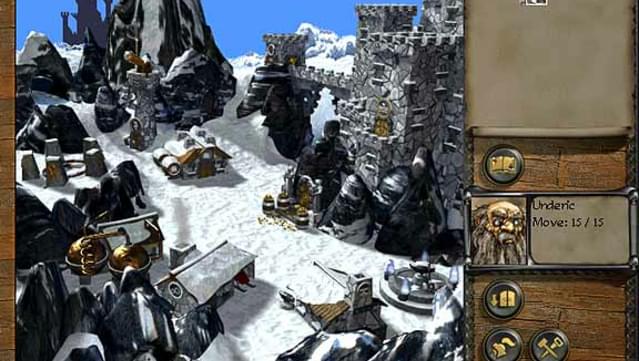
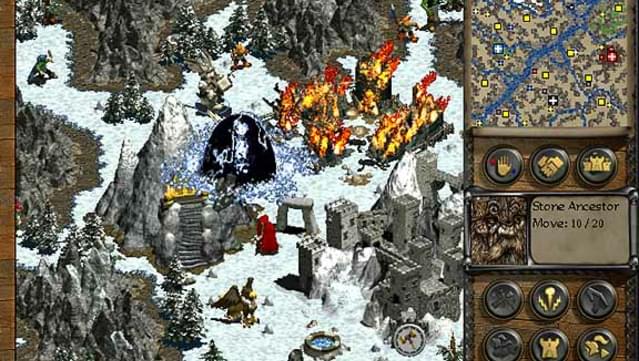
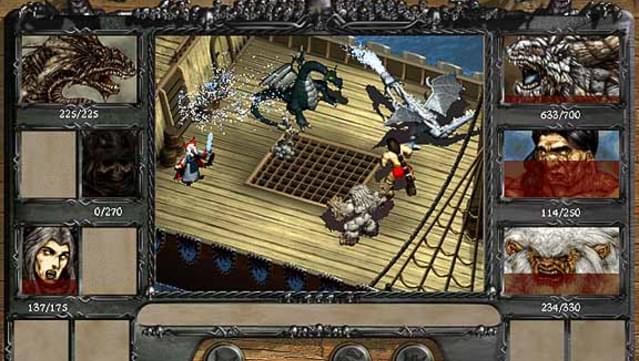
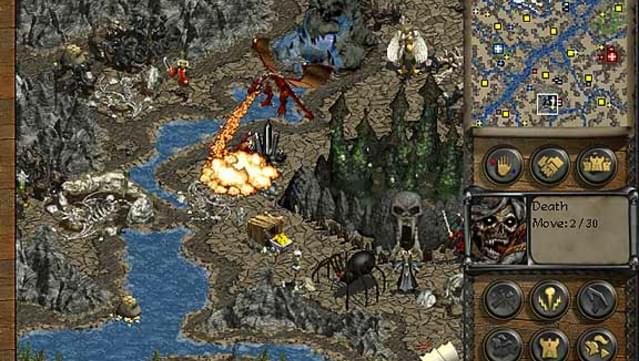
VISUALS; 4/5: The game isn't very graphically impressive. It's not ugly by any means, but it's nothing spectacular. Then again, given that it came out almost ten years ago, I guess I should be fairly impressed with it. At any rate, visual spell effects look cool, and everything looks like it is supposed to. In particular, the really big monsters that take up two whole combat "squares" look nice. Anyway, it's a TBS, right? What do the visuals really matter?
SOUNDS; 3/5: The sound is okay. Not bad, or good, but okay. The voice acting is pretty minimal, the sounds of swords and explosions is standard, and the "bite" sound that a number of different animal creatures make when they attack sounds like someone crunching on a potato chip. The music isn't bad, and there's a nice variety of tracks, but it doesn't really add anything to the experience. You can play this game with no sound and feel almost exactly the same.
WRITING/STORY; 4/5: The stories that the game's scenarios revolve around, while simple, are pretty good. The narration for the sagas (campaigns) comes out like a historical account of things that actually happened in the Disciples world, and it's just interesting enough to make you want to play on and see what happens. However, the delivery of these stories could use a little work, I feel. When you're actually playing the game between story narrations, the "storytelling" is limited to an occasional sentence or two uttered by your troops or by defeated enemies whenever you conquer a city. Compared to Heroes of Might and Magic, which could give you several paragraphs of exposition in response to several different ques, it's kinda tame.
GAMEPLAY; 4/5: As stated before, the game's strategy primarily involves actions you perform outside of combat. Tasks like putting your soldiers in an ideal formation; choosing the right troops for the job; leveling up your soldiers and generals; casting spells that bless, curse, damage, or summon stuff; using your Thief units to poison, disorganize, or assassinate enemy soldiers; and gathering resources are all generally more important than actually fighting. One big indicator of this is in how it is nearly impossible to sieze the capital cities of your enemies; every capital city is guarded by a divine avatar of that city's relevant deity, and this avatar can move with blinding speed, soak up tons of damage, and deal hundreds of points of damage with every attack; its only weakness is that it cannot leave the capital. As long as the capital stands, the civilization that capital is founded on lives, and thus you cannot "beat" your enemies in open combat. Instead, the way to "win" over your enemies is to cut them off from all resources. Surround their capital with your own towns and convert their land to your purposes, and whenever any units leave the capital to try to get any resources at all, kill them immediately. Keeping your foes too weak to fight back, or making yourself too strong to challenge, is the key to victory.
There is only one real flaw in this system, however, and that flaw is repetition. Every mission you go on generally follows the same pattern: you start by gathering resources, then you conquer stuff, and then you gather more resources, level up your troops, buy stuff, conquer stuff, gather resources, and follow this pattern until you eventually get to a point where you have one or two parties of high-level characters who you use to kill everything, and supplement their strength with magical buffs, curses, and airstrikes. So it goes with every single mission. However, unless you're a really impatient or sensitive person, you'll probably be too addicted to notice the repetitiveness, and you can change it up by playing different civilizations or altering the difficulty level.
VALUE FOR PRICE/OVERALL; 4/5: For ten bucks, this is a pretty good buy. The only really serious flaw in it is that it doesn't have much replay value; the scenarios you get when you buy it are all you've got, and if you try to replay anything, you may just find yourself doing almost exactly the same things as you did the first time you played, and the game will get old fast.
Compared to Heroes of Might and Magic Disciples may look alien, because it's completely different so if you're looking for a gameplay similar to HoMM you'll better pass this one.
In disciples the gameplay orbits about assembling an efficient group, levelling your units/heroes and begin well stuffed like any good RPG party, then you cross a lot of other parties that you'll need to beat the best way you can without taking much damages because there's a strategic map and the AI isn't stupid enough to let you pass unharmed if it sees an easy prey an destroy your well experienced party. What's good with this system is that you've the feeling that every unit you command has the potential of begin important as he/she/it can level up but you usually focus on one or two parties in order to level-up faster and not waste potential experience points.
Regarding city building, again all evolve around how the units you command will evolve when they level-up and that's for your capital, other cities can be considered as fortified healing points for your parties that you should use wisely.
About magic; it's always cast on the strategic map and can affect battles with summons, or blessings/curses or making sure one's party is seriously damaged before you attack this also means you can also completely destroy a party by bombarding them with powerful spells.
All of this means that disciples is a pretty easy to handle game without much micromanagement but this doesn't make it a simple game since the party-management has many ways but not all that effective and all the four factions have different units and means to create different parties, you'll have to experiment thinking about what you're facing but also the size of the map.
Story-wise while it isn't as good as it's successor, disciples depicts the event before the second one starts. Nor the story nor the warhammer-like setting of the game have something to be remembered (I personally liked it), they do their job, period.
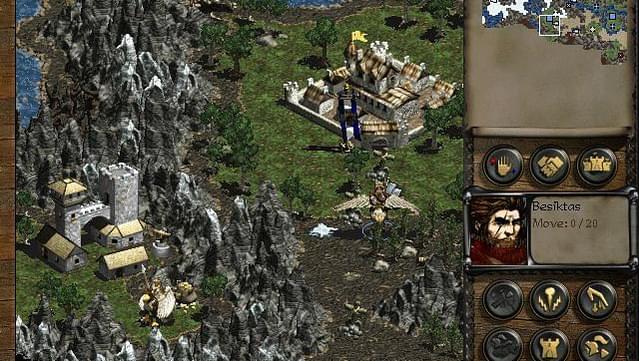
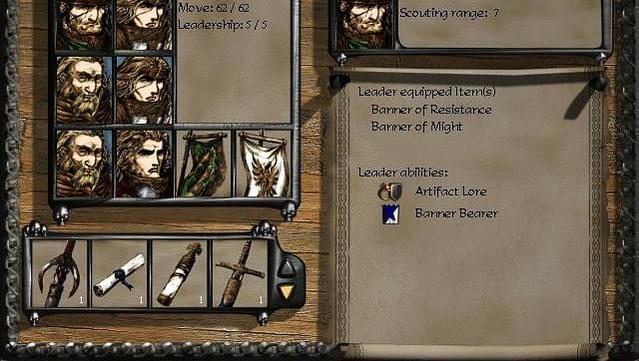
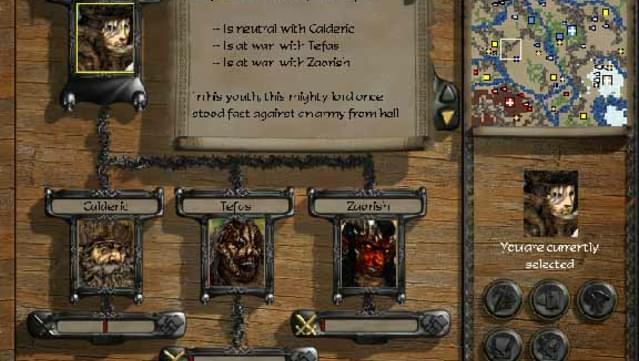
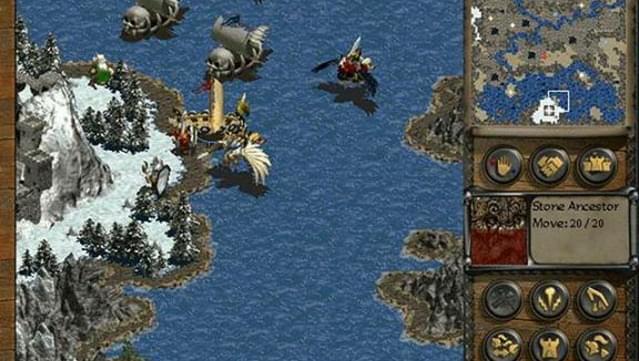
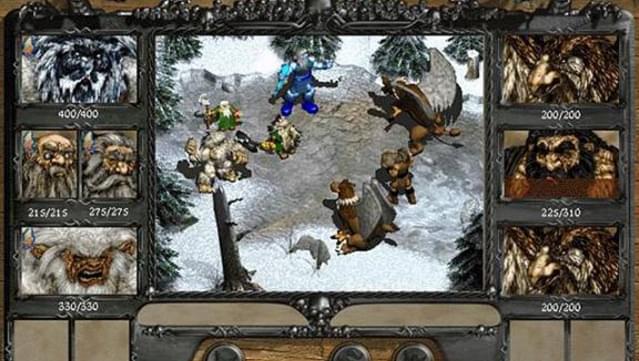
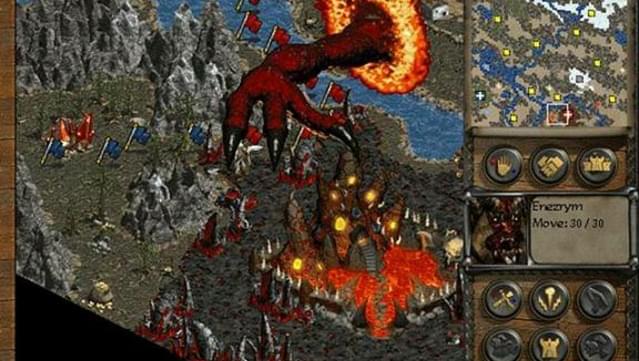
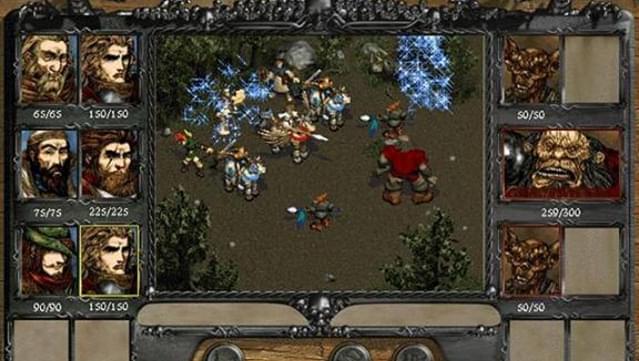
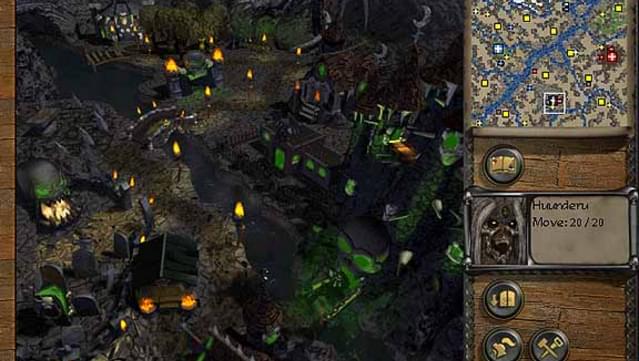
In terms of graphics, I'll let you judge by the screen-shots, that's not brilliant but not unbearable too. Hopefully the units pictures are well made. If you really can't bear the graphics you can go for disciples 2... but...
Seeing that both disciples 2 and 1 are sold at GOG, the question that some may ask is : "Why should I buy this old-looking version that has overall less things than it's successor ?" I'll say : it is not, between the two games gameplay hasn't changed much and surprisingly the game is more challenging than in D2, because the AI actually act properly and can make you lose your nerves and patience when your best hero get nuked by strategic map spells, this said you've to find tricks/strategies in order to win the harder scenarios that can be found in the campaigns, the game is actually beatable but require you to think a bit despite the gameplay is very straightforward.
To conclude this is a worthy game, that hides it's complexity behind a quite simple gameplay and it's worthy challenge for every fantasy-TBS gamer and is a tougher nut to crack than disciples 2,
Friendly warning!
This ain't a Heroes clone, if you are looking for a HOMM experience - you'll be disappointed!
IMPORTANT!
Play with a patch from the fellow named "verokster" available on his blogspot (I don't want to post link in a review, but it's easily googable). It let's you play in high resolutions, windowed/fullscreen with upscaled graphics and has many improvements like increasing the speed of animations for when you would have seen them many times already and just want to play quicker. Patch works for both Disciples 1 and 2 and is easy to set up.
All negative reviews that complain about compatibility did not use this patch!
I also fully recommend savescumming your way through this game, since it's pretty unforgiving and quite random at times. 'Q'uicksave is your friend, manual saves every time you accomplish something big recommended.
Pros:
+ Plays well (with patch!)
Cons:
- Looks dated
- Spell insta-kills - many units will have a max HP of about 100-ish on max XP level, while there are global spells that can deal 150 damage in a single cast, killing your troops instantly. The only way to avoid this is to always end your turn in a town, or savescum.
- Disciples 2 is better in every way
Lowdown
In every way worse than the sequel - Disciples 2 - which makes the original irrelevant unless you are a fan of the series and want to play the first game for the story/nostalgia or out of curiosity. I don't mean that this is a bad game - far from it - but it faces the same problem as Heroes of Might and Magic 1. At the time of it's release we didn't have anything like it, now we have a better option in the sequel.
I think it would deserve a positive score back in a day, nowadays since Disciples 2 is so much better I'll give it a neutral score of 3* - assuming you play with the patch I mention above. Seriously, don't play without it...
This game is waiting for a review. Take the first shot!
{{ item.rating }}
{{ item.percentage }}%
Awaiting more reviews
An error occurred. Please try again later.
Other ratings
Awaiting more reviews
Add a review
Edit a review
Your rating:
Stars and all fields are required
Not sure what to say? Start with this:
What kept you playing?
What kind of gamer would enjoy this?
Was the game fair, tough, or just right?
What’s one feature that really stood out?
Did the game run well on your setup?
Inappropriate content. Your reviews contain bad language.
Inappropriate content. Links are not allowed.
Inappropriate content. Content contains gibberish.
Review title is too short.
Review title is too long.
Review description is too short.
Review description is too long.
Not sure what to write?
You cannot save your review due to the following reasons:
You need to select star rating
You need to enter review title
You need to enter the content of your review
Show:
5 on page
15 on page
30 on page
60 on page
Order by:
Most helpful
Most positive
Most critical
Most recent
Filters:
No reviews matching your criteria
Written in
English
Deutsch
polski
français
русский
中文(简体)
Others
Written by
Verified ownersOthers
Added
Last 30 daysLast 90 daysLast 6 monthsWheneverAfter releaseDuring Early Access
Your review should focus on your in-game experience only. Let the game stand entirely on its own merits.
Avoid noise
To discuss topics such as news, pricing, or community, use our forums. To request new games and website or GOG GALAXY features, use the community wishlist. To get technical support for your game contact our support team.
Critique responsibly
To keep our review sections clean and helpful, we will remove any reviews that break these guidelines or our terms of use.
Ok, got it
GOG Patrons who helped preserve this game
Error loading patrons. Please refresh the page and try again.