LOST AT SEA, 1803
the good ship
"OBRA DINN"
----------------
Built 1796, London ~ 800 tons, 18ft draught
Captain R. WITTEREL ~ Crew 51 men
Last voyage to Orient ~ Cape rendezvous unmet
----------------
Contact East India Cy. London Office
for enquiries or testimonyAn Insurance Adventure wit...
LOST AT SEA, 1803
the good ship
"OBRA DINN"
----------------
Built 1796, London ~ 800 tons, 18ft draught
Captain R. WITTEREL ~ Crew 51 men
Last voyage to Orient ~ Cape rendezvous unmet
----------------
Contact East India Cy. London Office
for enquiries or testimony
An Insurance Adventure with Minimal Color
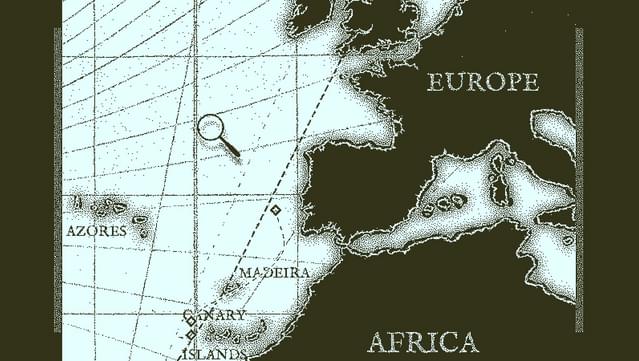
In 1802, the merchant ship Obra Dinn set out from London for the Orient with over 200 tons of trade goods. Six months later it hadn't met its rendezvous point at the Cape of Good Hope and was declared lost at sea.
Early this morning of October 14th, 1807, the Obra Dinn drifted into port at Falmouth with damaged sails and no visible crew. As insurance investigator for the East India Company's London Office, dispatch immediately to Falmouth, find means to board the ship, and prepare an assessment of damages.
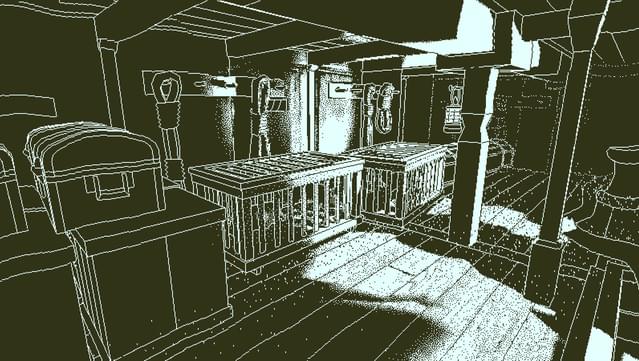
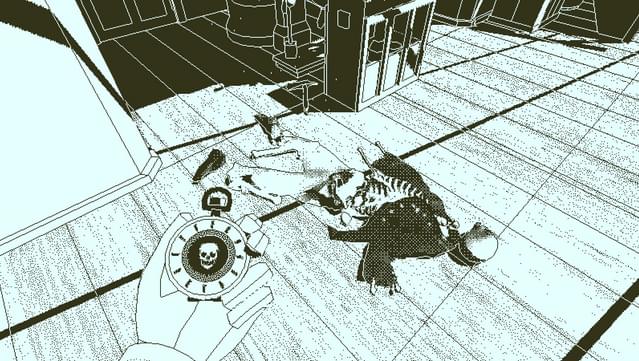
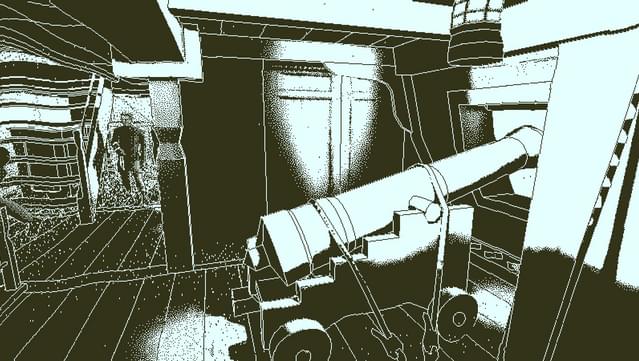
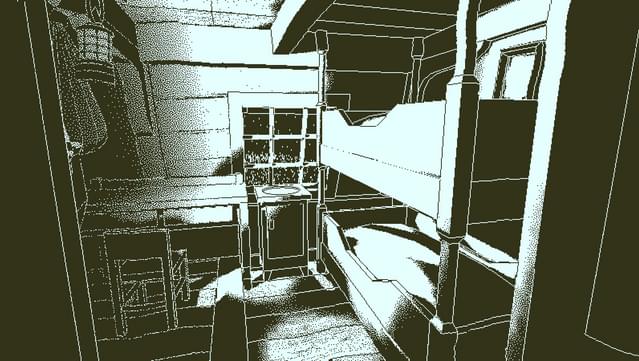
Return of the Obra Dinn is a first-person mystery adventure based on exploration and logical deduction.
I would very much like to review the game content,
but that stays inaccessible to me.
There is no known way to remap the key bindings. I searched the forums on several sites, checked support, readme files - nope. Controls hardcoded, no config files anywhere.
(I'd be glad if you can prove me wrong).
So Unless the pre-set controls happen to match your preferences and hands, it might be very tedious to play. Serious WARNING for those with non-standard hands/input facilities.
I've enjoyed a number of mystery games, even at their slowest, because of that amazing payoff. Maybe it's figuring out how the killer did it. Maybe it's working out who the killer is. Maybe it's when you THINK you knew what had happened, but a twist of fate and a late revelation actually shows it was the least expected thing. In some games, you already know who and how, but the climactic challenge is *proving* it.
99% of Obra Dinn's challenge and time spent is working out what is normally the very first piece of information in other mystery games: The identity of the victim.
I think what made me realize how terrible this was, was when I got another notification that I had guessed (yes, guessed) 3 crew identities/deaths correctly, and kind of just breathed a sigh of exhausted relief; while cursing the fact that the 3 somehow hadn't involved someone whose identity I was absolutely certain of, and who had simply died in a nondescript way to a beast. These moments are supposed to be the thrilling payoff of a mystery, when it all adds up together, but just like Papers Please, it really does feel like you're just a man filling in paperwork.
There's a little payoff soon after the discovery of a set of bodies where you learn what was generally happening in that chapter, and sometimes the surprise of that can be "mildly interesting" but that's the highest emotional swell this game gets.
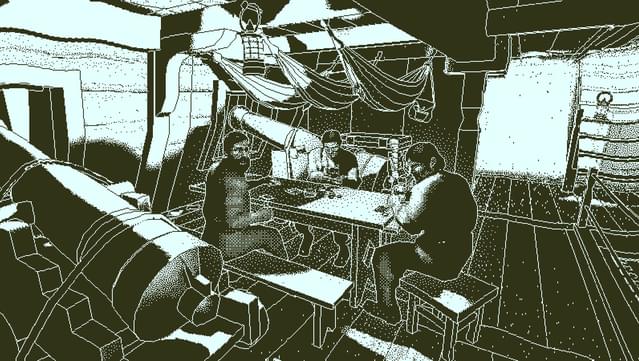
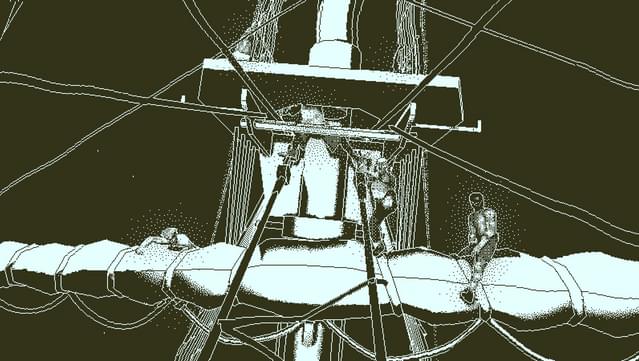
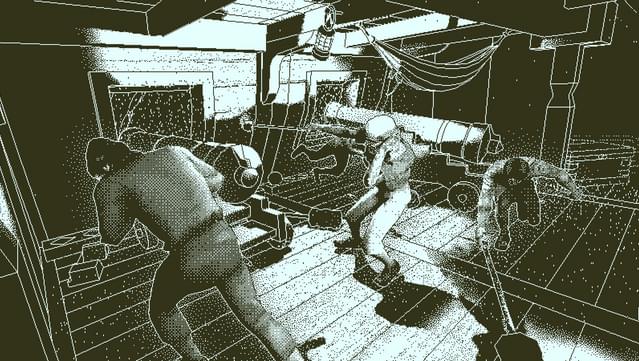
I will credit the game for its art style, and its unique design to mystery mechanics. I don't know of other games that work this way in either case, and it would certainly have been a risk setting out that way. An unfortunate glitch of fullscreen mode that prevents the mouse from working in other windows is particularly gruesome here given that lots of your inferences are meant to be made based on real-world information, like which languages are spoken in certain other 18th-century countries, and I would have liked checking Wikipedia in many cases.
This is a very unusual game, but it's such a boring gameplay. I gave up playing it pretty soon. I not new to adventure games, I love classic Sierra and Lucas games.
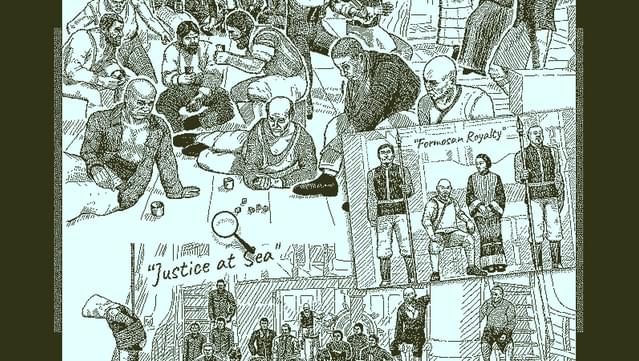
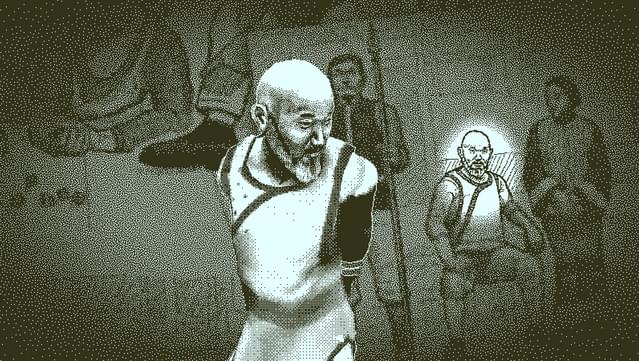
I won't repeat what others have said about the graphics or the atmosphere. However, the gameplay quickly becomes rather grinding. The choices of graphics may it quite uneasy to find clues and you soon end up switching back and forth between the various scenes, wondering "what I have overlooked there?". Such switching is unfortunately slow because of the various animations and effects. Compending this, the game asks you to qualify the various deaths, but the question "what killed X and how did they die?" doesn't always admit a precise answer, given the intentional vagueness of the graphical representations and the, let's say, surreal nature of some entities (is it a "creature"? is it an "enemy"? when you receive multiple flying pieces of metal (?) in your body, what is the accurate verb to describe your death?).
In the end, I probably didn't go further than 25% of the game, and don't intend to come back to it.